
Surgery goes well. You come home, you rest, you follow the discharge instructions. And then weeks pass and something doesn’t feel right — the movement isn’t coming back the way you expected, the pain is still there, or you’re managing daily tasks in ways that don’t feel normal.
Most people assume this is just how recovery goes. Often it isn’t. There are specific signs that your surgical recovery has stalled or is heading in the wrong direction — and each of them responds directly to professional post surgical physiotherapy in Noida when addressed at the right time.
This article covers seven clear signs that your recovery needs more than rest and time, and exactly what professional physiotherapy does about each one.
Why Surgical Recovery Stalls
Surgery creates the structural conditions for recovery. It doesn’t deliver recovery itself.
After surgery, a predictable sequence of biological events unfolds — inflammation, tissue repair, remodeling. During this process, muscles weaken from disuse and neural inhibition, joints stiffen from immobilization, scar tissue forms and can restrict movement, and the body develops compensation patterns around the healing area.
None of these are unusual. All of them are manageable with the right physiotherapy approach. The problem is when they’re not managed — when rest-and-wait becomes the default strategy past the point where it’s appropriate.
The best physiotherapy clinic Noida offers for post-surgical care provides active, clinically precise rehabilitation that addresses each of these mechanisms directly. The seven signs below are your body’s way of telling you that the passive approach isn’t working.
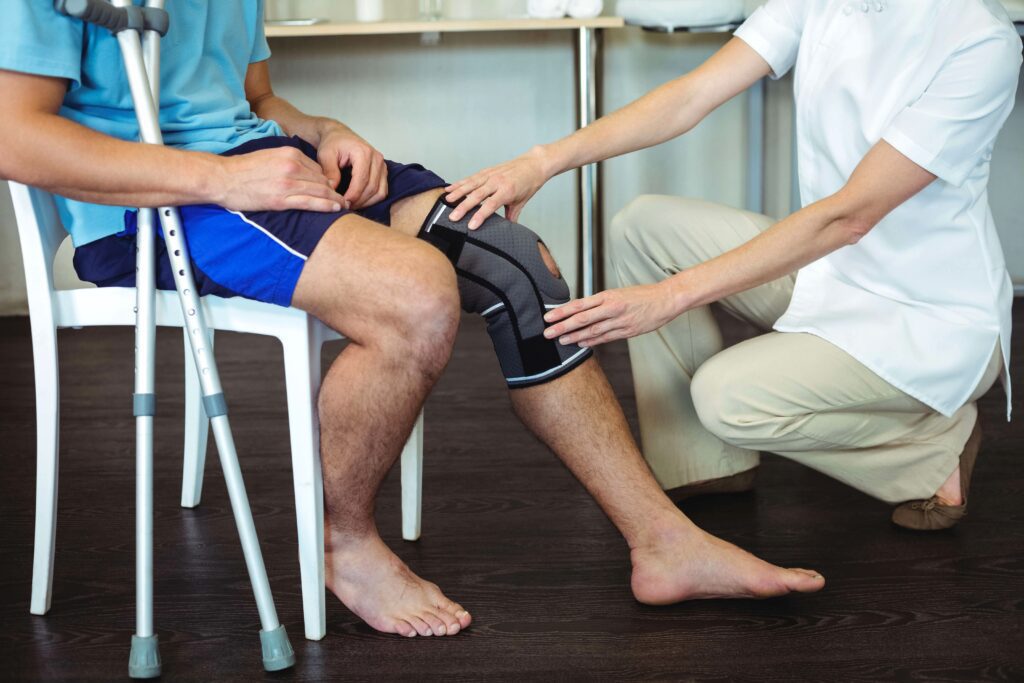
Sign 1 — You’re Still Significantly Stiff at Four Weeks Post-Surgery
Some stiffness in the early post-operative weeks is entirely expected. Inflammation and the early phase of tissue healing create stiffness that is physiologically normal.
Significant stiffness that persists at four weeks — particularly if it hasn’t been improving week on week — is a different picture. It suggests that the joint capsule is tightening beyond what the healing process alone explains, or that scar tissue is beginning to form adhesions that will become progressively harder to resolve.
Why the Four-Week Window Matters
Scar tissue is still malleable for roughly eight to twelve weeks after surgery. During this window, targeted mobilization — both manual therapy and directed exercise — can prevent adhesions from forming and guide collagen alignment along functional lines.
After this window closes, restrictions become significantly more permanent. What takes two to three sessions to address at four weeks may take months to address at six months. This isn’t a reason for alarm — it’s a reason to act promptly when you notice persistent stiffness rather than continuing to wait.
Sign 2 — Your Movement Isn’t Reaching the Expected Benchmarks
Different surgeries have documented range of motion benchmarks at specific timepoints. These exist because research has established what adequate healing and rehabilitation progress looks like — and because falling below these benchmarks has direct functional consequences.
After total knee replacement: 0–90 degrees of flexion by two weeks, 90–110 degrees by four to six weeks, 120+ degrees by eight to ten weeks. After shoulder surgery: progressive restoration of forward flexion and abduction through a defined timeline depending on the specific procedure.
If you’re aware that your range isn’t meeting expected milestones — or if your surgeon or physiotherapist has noted this at a follow-up — that’s a direct sign that rehabilitation needs to be more active and targeted.
What’s Typically Holding Range Back
Joint capsule restriction is the most common cause of range limitation after surgery. It responds well to specific joint mobilization techniques that can’t be replicated through home exercise alone. Manual therapy by a skilled physiotherapist directly addresses capsular restriction — producing improvements in range that weeks of exercise at home haven’t achieved.
Sign 3: Muscle That Simply Won’t Switch On
This is one of the most clinically significant and commonly under-recognized signs in post-surgical physiotherapy recovery.
After surgery involving or adjacent to a joint, the nervous system inhibits the surrounding muscles as a protective response. This neural shutdown is involuntary and often profound — the muscle is structurally intact but won’t contract properly because the nervous system has suppressed its activation.
You notice it as an inability to generate a firm contraction in the affected muscle, significant visible atrophy developing quickly despite rest, and a feeling that the limb is “not yours” or isn’t responding normally.
Why This Doesn’t Resolve on Its Own
Neural inhibition after surgery doesn’t automatically reverse when the acute phase passes. Without deliberate neuromuscular reactivation work — specific exercises targeting the inhibited muscle, potentially combined with neuromuscular electrical stimulation — the inhibition can persist for months.
Patients with persistent quadriceps inhibition after knee surgery develop characteristic movement compensations — they hike their hip, use momentum, or lean on other structures to achieve what the quad should be doing. These compensations create secondary problems in the hip, lower back, and opposite knee that outlast the original surgery.
Getting a physiotherapist involved when you notice this pattern — not waiting to see if it improves — is the right call.
Sign 4 — Pain That Isn’t Following the Expected Trajectory
Pain after surgery should follow a predictable trajectory: worst in the first three to five days, gradually improving through weeks two to four, and continuing to reduce through the following months. This trajectory isn’t linear — there will be days that are harder than others — but the overall direction should be consistently downward.
Pain that is:
- Not reducing at all after the first two weeks
- Increasing after an initial period of improvement
- Changing in character — particularly if it becomes sharper, more burning, or begins radiating
— all warrant physiotherapy assessment, and in some cases, communication with your surgeon.
What Changing Pain Patterns Can Indicate
Pain that isn’t improving often reflects ongoing mechanical irritation from a specific source — a joint that isn’t moving correctly, a muscle that’s compensating under excessive load, or scar tissue creating traction on a pain-sensitive structure.
Pain that increases after initial improvement sometimes indicates that activity has been advanced too quickly — exceeding the healing tissue’s current capacity. A physiotherapist can identify which is happening and adjust the program accordingly.
Pain that changes character — particularly radiating or burning pain after spinal or joint surgery — warrants urgent assessment, as it may indicate nerve involvement requiring medical review.
Sign 5: You’ve Developed an Obvious Compensation Pattern
If you’re limping three to four weeks after lower limb surgery that wasn’t supposed to require long-term gait alteration, you’ve developed a compensation pattern. If you’re holding your arm in a fixed position weeks after it should have begun moving freely, the same applies.
Compensation patterns are the body’s practical solution to a functional deficit. The problem is that they distribute load onto structures not designed to bear it, creating secondary problems that compound over time.
The Chain Reaction of Unaddressed Compensation
A persistent post-surgical limp shifts load patterns significantly. The hip abductors on the affected side are typically underloaded — contributing to ongoing weakness. The knee and hip on the unaffected side are overloaded — producing pain and degeneration over time. The lower back compensates for asymmetric loading — producing spinal symptoms that seem unrelated to the original surgery.
This chain reaction is entirely preventable with appropriate physiotherapy that identifies and corrects the compensation pattern while it’s still early and relatively easy to reverse.
Sign 6 — Swelling That Persists Beyond the Expected Period
Some swelling after surgery is normal and expected. Persistent swelling — beyond the timeframe consistent with normal healing for your specific procedure — is a clinical sign that something needs attention.
Persistent joint effusion (fluid in the joint) has direct functional consequences independent of pain. It inhibits the muscles around the joint through a well-documented neurological mechanism — the degree of inhibition correlates with fluid volume. A swollen knee that isn’t being managed actively is also a knee whose quadriceps are being neurologically suppressed.
What a Skilled Physiotherapist Does About Persistent Swelling
The best physiotherapist in Noida for post-surgical cases addresses persistent swelling through several complementary approaches: manual lymphatic drainage techniques to promote fluid clearance, compression application, elevation guidance, and exercise prescription that promotes the muscle pump mechanism without exceeding the tissue’s current capacity.
Importantly, they also assess whether the swelling warrants referral back to the surgeon — increased warmth, redness, fever, or swelling that increases rather than fluctuates are signs of possible infection requiring urgent medical review rather than physiotherapy management.
Sign 7 — You’re Avoiding Activities You Should Be Able to Do By Now
This is often the last sign patients recognize because it develops gradually. You’ve stopped trying to do certain things. You’ve quietly adjusted your expectations about what you can manage. You’ve accepted limitations as the new normal without questioning whether they’re actually permanent.
Common examples: avoiding stairs because the operated knee still doesn’t cope with them at eight weeks post-total knee replacement. Avoiding overhead reaching at three months after rotator cuff repair because the shoulder still catches. Avoiding walking any significant distance at six weeks after lumbar surgery because the back still tires quickly.
Why Functional Avoidance Is a Recovery Problem
When you consistently avoid loading a healing structure, you signal to the body that the load isn’t needed. The tissue doesn’t develop the capacity for demands it never experiences. Strength, endurance, and functional movement quality all require progressive challenge to develop.
MotionRX works with post-surgical physiotherapy patients specifically at this stage — people who’ve passed the acute recovery phase but haven’t returned to the functional level they expected, and who have begun to accept that limitation as permanent. Frequently it isn’t. The right targeted rehabilitation, even at three to six months post-surgery, produces genuine functional improvement.

What Professional Post-Surgical Physiotherapy Actually Involves
For anyone recognizing these signs, it’s worth understanding what engaging with post-surgical physiotherapy actually means in practice.
The Initial Assessment
Your first physiotherapy session after surgery is primarily assessment — establishing exactly where you are, what’s limiting you, and what the specific barriers to progress are. A thorough assessment takes forty-five to sixty minutes and looks at range of motion, strength, swelling, movement quality, and the presence of compensation patterns.
You leave with a clear picture of what’s happening and why, and a specific plan for addressing it.
The Treatment Approach
Effective post-surgical physiotherapy combines manual therapy — hands-on joint mobilization, soft tissue work, scar mobilization — with a progressive therapeutic exercise program and a home program that maintains the work between sessions.
The program advances based on what your body is actually demonstrating — specific range, strength, and movement quality criteria — rather than purely on elapsed time. This criteria-based approach is what produces reliable outcomes.
MotionRX structures post-surgical physiotherapy rehabilitation around precisely this model: thorough assessment, one-on-one treatment with a qualified physiotherapist, objective progress tracking, and a home program that extends the clinical work into the other five days of the week.
When to Seek Post-Surgical Physiotherapy — The Honest Answer
If you’re recognizing any of the seven signs in this article, the answer is now — not at the next scheduled surgeon follow-up, not after another few weeks of waiting to see if things improve.
The recovery window is real and finite. The same stiffness that takes two or three focused sessions to address at four weeks may take months at six months. The compensation pattern that’s been developing for eight weeks is more established and harder to correct than the one that’s been developing for two weeks.
Booking an assessment at a best physiotherapy clinic Noida has available for post-surgical care is not an admission that something has gone wrong. It’s the recognition that active rehabilitation produces better outcomes than passive waiting — which is as true after surgery as it is for any other musculoskeletal condition.
Conclusion
Surgical recovery doesn’t take care of itself. Pain that isn’t improving, stiffness that persists, muscles that won’t activate, compensation patterns that are becoming habitual — these are signs that your body needs more than rest and time.
Post surgical physiotherapy in Noida from a skilled, experienced physiotherapist addresses each of these signs specifically and effectively. Don’t accept a recovery plateau as the final outcome when targeted rehabilitation could take you considerably further.
If you recognize these signs in your own recovery, book an assessment. The earlier you engage with professional physiotherapy support, the more complete your recovery will be.